Water Drops: News and Updates
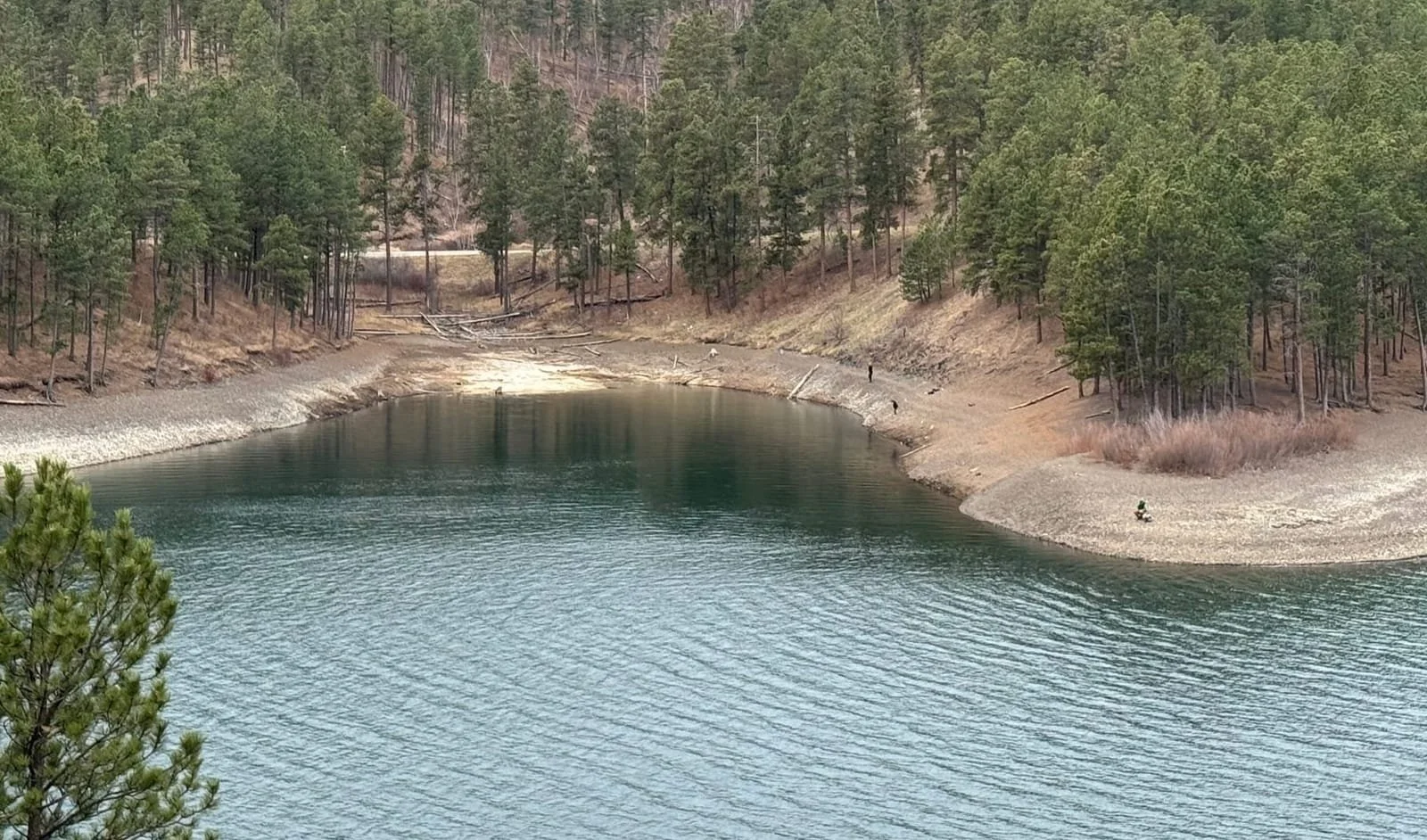
Water levels in Pactola Reservoir, S.D., in the Black Hills of South Dakota -- a main source of drinking water for the Rapid City region -- were far lower than normal on April 21, 2025. (Bart Pfankuch / South Dakota News Watch)
Black Hills water supplies are not meeting demand, a study says, as reported by South Dakota News Watch on August 11, 2025.
As the article describes, lingering drought conditions and low inflow levels are contributing to a water shortage in the region. While this news is not current per se, it is clear that this winter has been another dry one, leading to the logical assumption that these drought conditions are persisting. A pattern appears to be developing regarding seasonal precipitation: every winter is “another dry one” with below-normal snowfall and warmer-than-usual temperatures. The "fuel tank" for our landscapes is no longer being recharged annually as it has been in the past, yet we continue to move forward without curb usage or consideration for our consumption.
Water purveyors have implemented water-use restrictions that are often vague and non-quantitative, mostly limiting the days and hours for sprinklers and irrigation systems. These types of restrictions can feel arbitrary and fail to address the core issues of landscape water waste. True conservation should begin at installation; irrigation systems must be designed and installed correctly to be efficient and apply water as intended. Furthermore, landscapes should be designed to utilize stormwater resources, significantly limiting the need for supplemental irrigation.
Do you want to conserve water in your landscape?
Contact us today to schedule a consultation and explore the conservation opportunities your property has to offer.
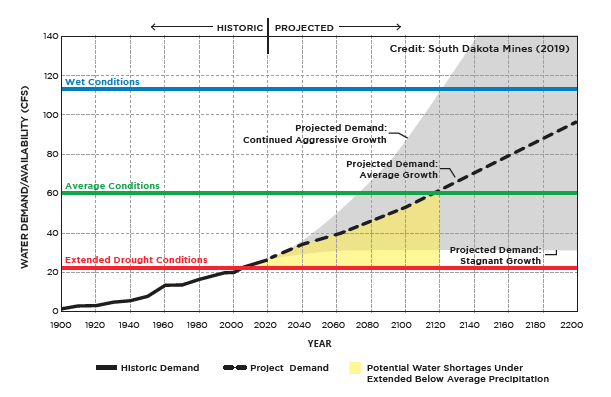
The growing gap of water demand and availabilty in The Black Hills.
We often hear about "water restrictions," but this chart shows the why behind them. With aggressive growth in the Black Hills, our "fuel tank" is being drained faster than it can recharge. Notice the yellow area? That represents the water shortages we face if we don't change how we consume. It’s time to move beyond vague restrictions and toward intentional, water-smart landscape design.