Landscape Tips: How to Help Save Trees During a Dry Winter
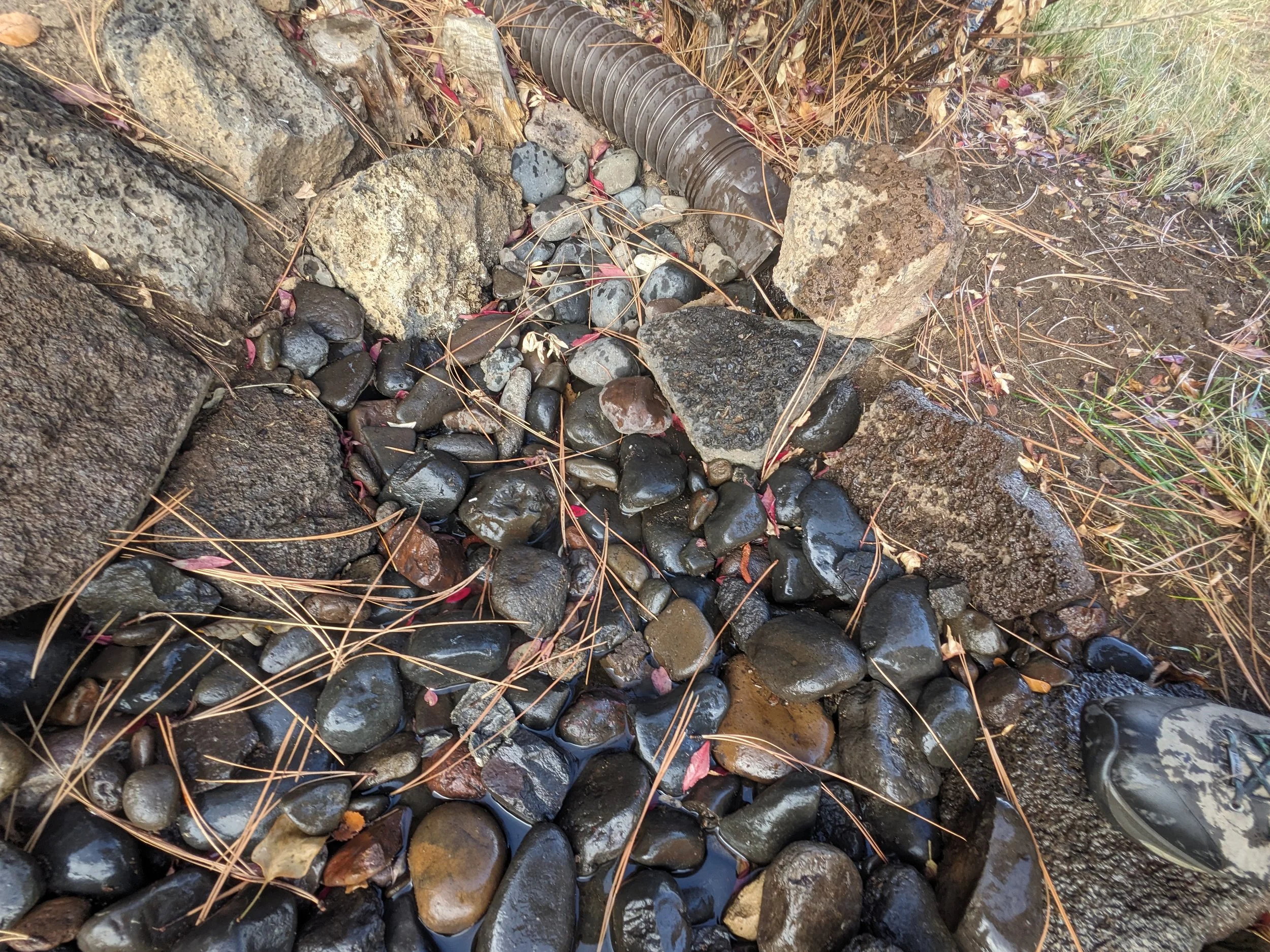
A downspout adapter is directed towards a swale filled with drain rock designed to detain the storm water on site. Benefits of storm water detention include erosion control and providing irrigation to landscapes during winter months.
How to Save Trees During a Dry Winter | Landscape Tips
Another dry winter is here, and for newly planted trees, it can be a season of struggle rather than a rest. Without snow to act as an insulator and retain moisture, soil moisture levels can plummet. Contrary to popular belief, trees still need water in the winter. While they consume less than they do during the growing season, a minimal amount of water is vital for survival - especially for conifers and other trees during their first three years of establishment.
Since most irrigation systems are winterized and turned off, supplemental water means dragging a hose across a frozen yard. If you want to make winter watering easier and more effective, consider these professional landscape strategies:
Strategic Placement: Before planting, evaluate your land’s topography. Identify natural low points where moisture collects or areas prone to extreme dryness. Positioning trees where they naturally receive storm water runoff can significantly reduce the need for manual watering.
Passive Rain Harvesting: Consider altering your landscape to direct runoff toward your trees. This can be done discreetly with underground piping connected to downspouts, or aesthetically through swales and dry stream beds. This approach provides off-season hydration while preventing negative drainage issues near your foundation.
Dedicated Irrigation Zones: If you are installing a new system, place trees on their own irrigation zone. Trees have different water needs than turf or shrubs. Improper watering during the establishment phase leads to shallow roots, making trees more susceptible to disease, wind damage, and death.
Winter-Ready Irrigation Design: For a truly proactive approach, design your irrigation tree zone with winter use in mind. By utilizing these design elements, you can measure the amount of water your trees receive and avoid over watering that can easily kill trees during the dormant season. Creative design solutions include:
Quick coupler valve with check valves for temporary connections
Root watering systems and bubblers that deliver water directly to the root zone
Auto-drains and flush valves that allow pipes to empty after use, preventing freeze damage
If you’d like to further explore any of these ideas or possible other options and see how they could benefit your project, contact us today.