Pasque Times: A Monthly Portrait of Black Hills Flora
In the Black Hills, "tough" isn't just a trait—it’s a survival requirement. Between our blistering summer droughts and bone-chilling winter winds, our landscapes take a beating. If you’re looking for a plant that doesn’t just survive these extremes but actually thrives in them, look no further than Juniperus communis, the common juniper.
The King of Drought Tolerance
While lush, thirsty ornamentals struggle the moment the rain stops, the common juniper is just getting started. This native shrub is built for the semi-arid climate of Western South Dakota. Once its deep root system is established, it requires zero supplemental watering, even in the heat of July. By choosing this juniper over non-native evergreens, you aren't just saving money on your water bill—you’re practicing responsible land stewardship in a region where water is a precious resource.
Built for "Lesser" Soils
We’ve all seen it: that rocky, thin soil on a limestone slope where nothing seems to grow. That is the common juniper’s happy place. It doesn't need fertilizer or rich potting soil. In fact, it prefers the lean, well-drained ground that characterizes much of the Black Hills. It’s the perfect solution for erosion control on steep banks or filling in "dead zones" where other shrubs wither.
An Environmentally Wise Choice
Choosing native plants like the common juniper is one of the most impactful things a homeowner can do for the local ecosystem.
Chemical-Free Success: Because it has evolved alongside local pests and diseases, it rarely needs the pesticides or fungicides that non-native species require.
A Year-Round Sanctuary: While deciduous shrubs leave the landscape bare in winter, the juniper’s dense, evergreen foliage provides critical thermal cover for songbirds and small mammals during our sub-zero stretches.
Pollinator & Bird Support: Its waxy blue cones (the "berries") are a high-energy winter food source for everything from Cedar Waxwings to Wild Turkeys.
Beauty Without the Work
Modern landscaping is moving away from high-maintenance "lawn-centric" designs toward xeriscaping—and the common juniper is the MVP of this movement. Its low-growing, spreading habit creates a natural evergreen carpet that suppresses weeds and looks beautiful year-round with literally no pruning required.
In a world of finicky plants, Juniperus communis is a breath of fresh air. It’s hardy, it’s beautiful, and it’s the most environmentally responsible way to bring the spirit of the Black Hills into your own yard.
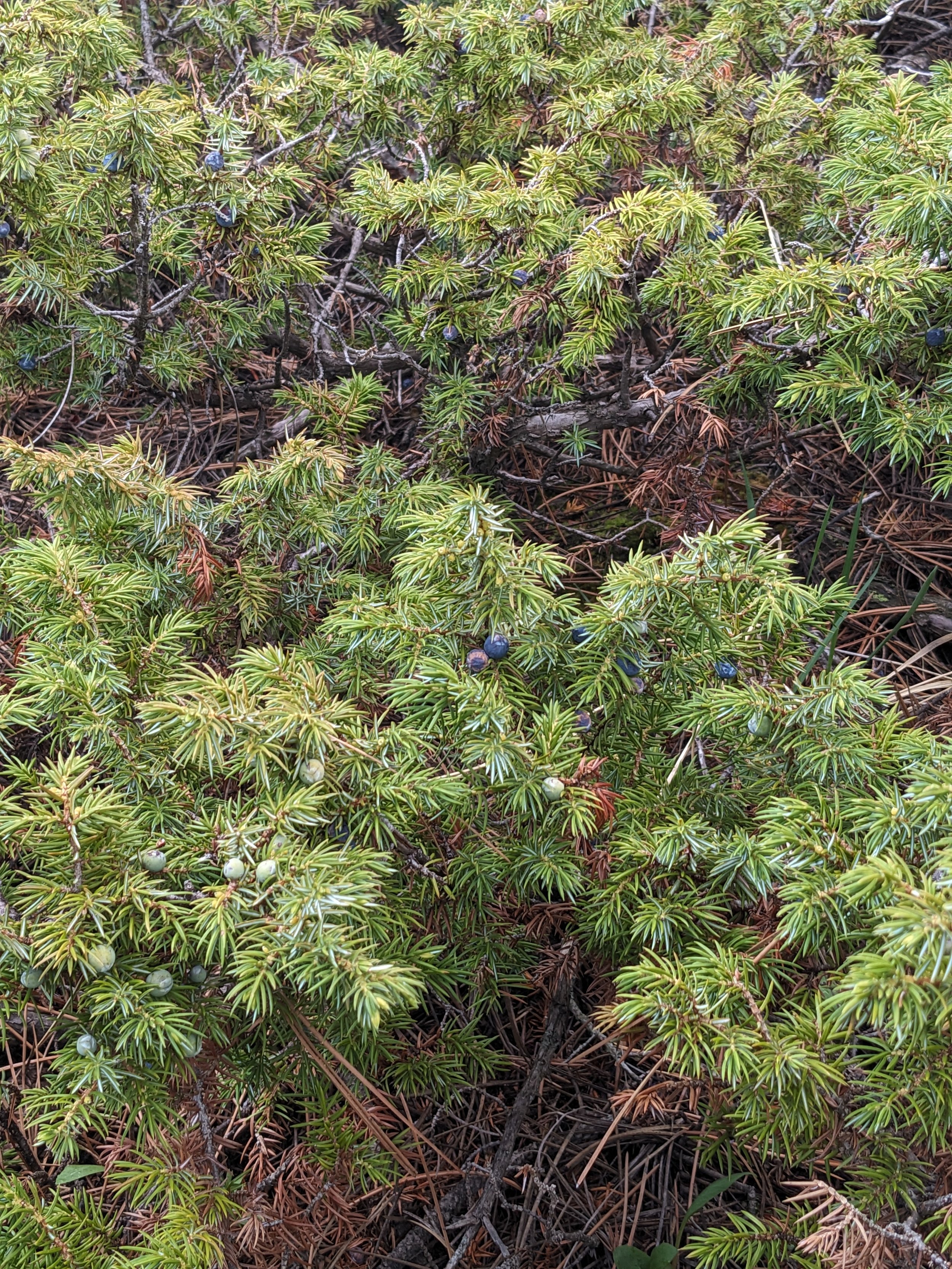
Common juniper (Juniperus communis) during the month of May in The Black Hills.