Design Considerations: Irrigation Choices
"What Type of Irrigation Should I Use?" Is a Trick Question.
"What type of irrigation should I use?" It seems like a simple question, but the answer is usually more complex than homeowners expect.
As an irrigation designer, I’ll admit my excitement for the "perfect" setup isn't always shared. Most people expect a one-word answer—drip or sprays—and are instead met with a rapid-fire interrogation:
Do you have any existing irrigation? What’s your water source and psi?
How many gallons per minute are available?
Are you germinating seeds or planting starts? Full sun or shade?
What’s your soil type? Is there a slope?
I know—it’s a lot. But here’s why those questions matter:
Existing Layout Dictates the Design
If you already have a system, we might simply retrofit a zone with pressure compensation and filtration. Depending on your water source, you might need a pressure reducer, an inline pump, or specific filtration for algae and sediment. If your design calls for 20 gallons per minute but your source only provides 10, your sprinklers simply won't perform.
Plants and Lifestyle Matter
What you grow changes how you water. Germinating seeds is a struggle with drip tape but easy with sprays. Conversely, many plants hate wet foliage, making soil-surface drip irrigation the more efficient, healthier choice. Even your lifestyle plays a role—wanting to monitor your garden from a smartphone while on vacation requires a completely different setup than a manual hose-and-faucet approach.
The Land Itself
Soil intake rates and slope are the difference between a thriving garden and wasteful runoff or erosion. Even sun exposure matters; full-sun areas often require tighter emitter spacing than shadier spots on the same property.
The Bottom Line
Every site is a unique puzzle of water sources, soil, and plants. While your neighbor’s setup is a great starting point, remember that even slight differences in pressure or slope can be the difference between a functional system and a failing one. Before you dig, make sure you're answering the right questions.
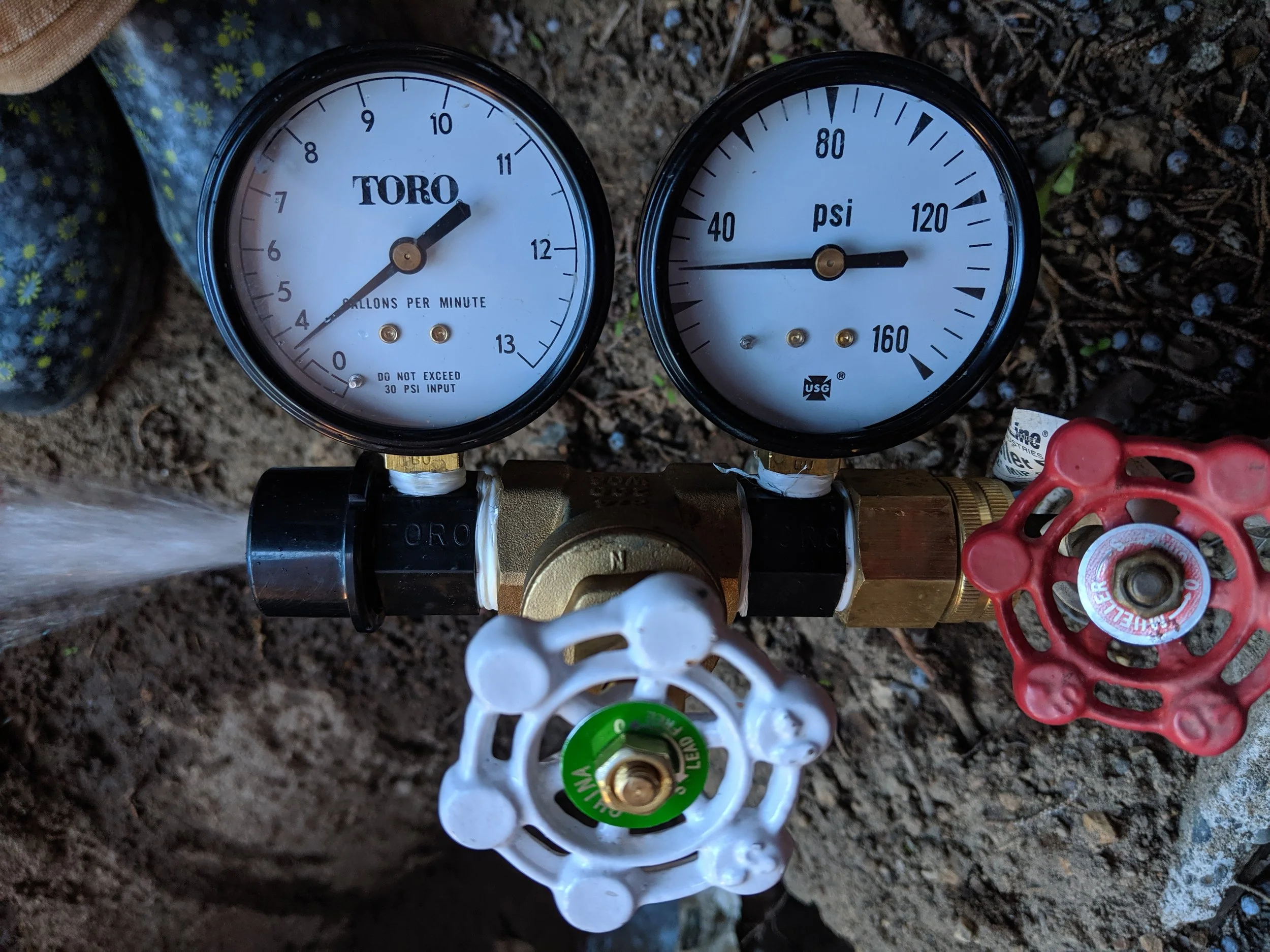
The go-to tool for determining design capacity and troubleshooting irrigation systems, a psi/flow gauge.